How to Determine Your Car's Market Value
Table of Contents
- Start with Your Car’s Age, Mileage, and Trimline
- Review Car Condition and Service History
- Use Online Tools and an Appraisal Tool for a Starting Estimate
- Compare Market Trends and Local Omaha Demand
- Understand Clean-Title, History Report, and Dealership Advantages
- Get a Clear Value before You Sell or Trade
Knowing how to determine your car’s market value helps you make a smarter decision before you sell, trade, refinance, or shop for your next used vehicle. A realistic value gives you confidence during pricing, negotiation, and appraisal conversations. It also helps you avoid asking too much, accepting too little, or relying on a guess that doesn't match the Omaha market.
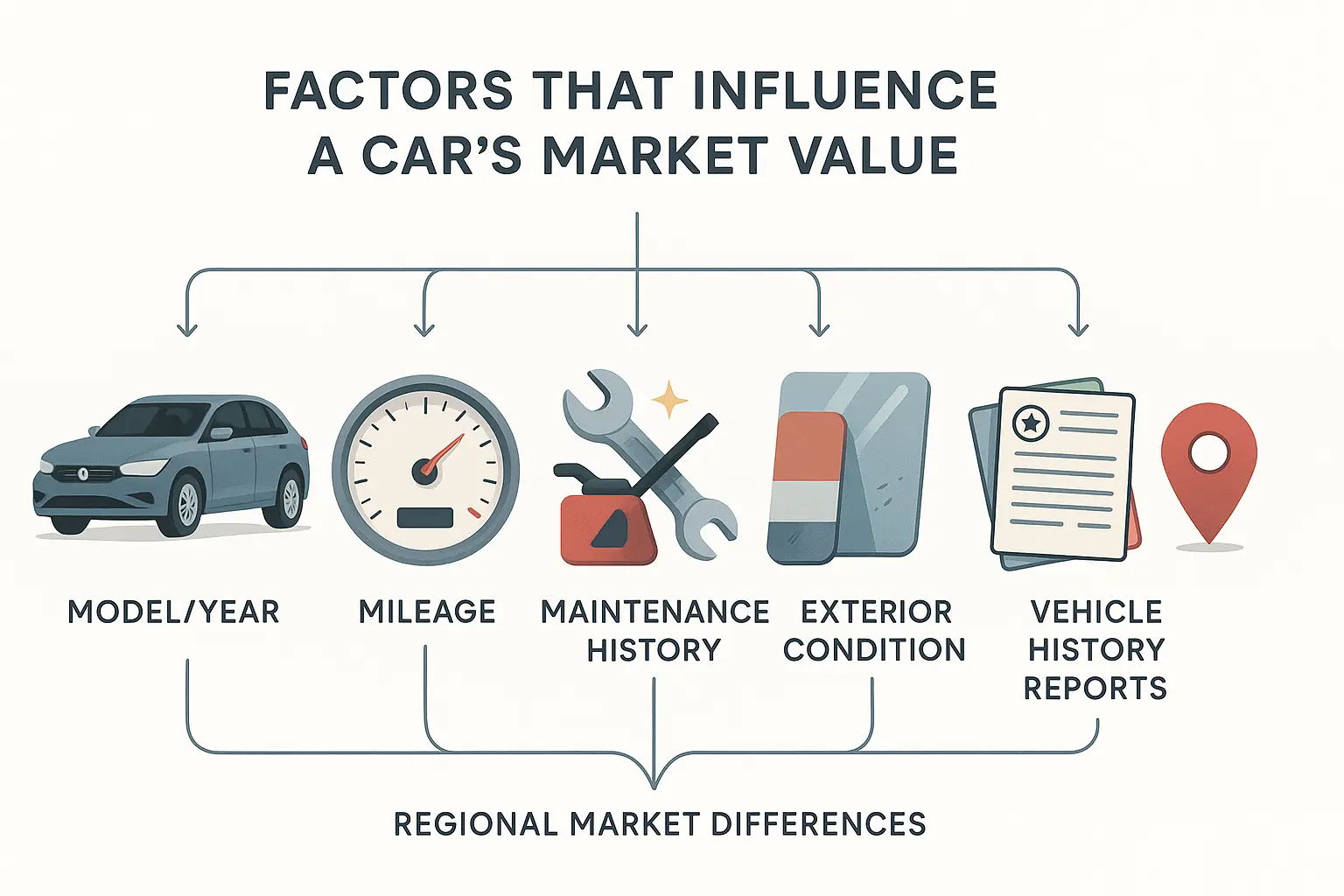
A car’s value is shaped by many details, including age, mileage, trimline, condition, service history, title status, local demand, and comparable car prices. Online tools can give you a helpful starting point, but the most accurate number usually comes from combining digital estimates with real market data and an in-person review.
Gateway Auto Sales helps Omaha drivers buy, sell, finance, service, and trade used vehicles with a clear, low-pressure process. Our team uses transparent pricing, clean-title standards, and local market insight to help you understand what your vehicle may be worth today.
Use the steps below to track your car’s value, compare estimates, and prepare for a fair sale or trade.
Start with Your Car’s Age, Mileage, and Trimline
The first step in valuing any used car is identifying the exact vehicle. Year, make, model, trimline, engine, drivetrain, mileage, and options all affect the price. Two cars may look similar but have very different values because of added features, lower mileage, or a higher-demand configuration.
Age matters because vehicles usually depreciate over time. Newer models often bring higher offers because they may have updated safety features, technology, and lower wear. Older vehicles can still hold strong value when they're reliable, well-maintained, and popular with local buyers.
Mileage is just as important. A 7-year-old vehicle with 65,000 miles will usually be valued differently than the same model with 145,000 miles. Lower mileage can raise buyer confidence, but maintenance matters too. A higher-mileage vehicle with strong service records may still perform well in a trade or private sale.
Trimline and options can also change the number. Leather seating, all-wheel drive, advanced safety features, upgraded wheels, navigation, towing packages, sunroofs, and premium audio may add value. On the other hand, missing features that buyers expect in that model may make the vehicle less competitive.
Before using any appraisal tool, gather the details you will need:
- Year, make, model, and trimline
- VIN or license plate information
- Current mileage
- Engine and drivetrain
- Major options and packages
- Title status
- Accident or damage history
- Recent repairs or service records
Being precise matters. If you enter details incorrectly, the estimate may be too high or too low. A wrong trimline, missing mileage, or skipped accident history can change the result. Take a few minutes to confirm the information before comparing values.
Review Car Condition and Service History
Condition is one of the biggest reasons online estimates and real offers differ. A vehicle can look good in a listing but lose value during inspection if it has warning lights, worn tires, fluid leaks, body damage, stained upholstery, rust, or mechanical concerns.
Most valuation tools ask you to rate the condition. Be honest. Calling a car “excellent” when it has dents, worn brakes, or a check engine light will create an unrealistic estimate. A fair condition rating gives you a better starting point and helps avoid surprise adjustments later.
Service history can raise buyer confidence. Receipts for oil changes, brake repairs, tire replacement, battery work, transmission service, coolant service, and inspections show that the car has been cared for. Buyers often feel better about paying a fair price when they can see proof of maintenance.
Gateway Auto Sales values transparency because it helps both sides understand the vehicle clearly. A clean title, detailed vehicle history report, and organized service records can support a smoother appraisal and reduce uncertainty.
After reviewing condition, decide whether small updates could help. Cleaning the interior, replacing worn wipers, fixing a bulb, removing personal items, and gathering records may improve buyer confidence without major expense. Larger repairs should be weighed against the expected value increase.
Here is a simple look at how common value factors affect pricing.
| Value factor | What it means | How it may affect price |
|---|---|---|
| Age | Years since the vehicle was built | Newer models often bring stronger offers |
| Mileage | Total miles driven | Lower mileage may raise value |
| Trimline | Feature level and options | Higher trims may bring higher demand |
| Car condition | Exterior, interior, and mechanical state | Better condition can support a stronger price |
| Service history | Proof of maintenance and repairs | Organized records can build trust |
| Title status | Clean, branded, rebuilt, or salvage title | Clean-title vehicles usually bring stronger value |
| Local demand | What Omaha buyers want now | Popular cars, trucks, and SUVs may sell faster |
Use Online Tools and an Appraisal Tool for a Starting Estimate
Online tools can help you estimate car worth quickly. Sites such as Kelley Blue Book, KBB.com, Edmunds’ appraisal tool, NADA-style used car book values, and other free car value estimator platforms collect pricing data and show a range based on vehicle details.
These tools are helpful because they give you a reference point before you talk with buyers or dealers. They can show private-party value, trade value, and retail pricing. Each number serves a different purpose. A private-party price is usually what you might ask when selling to an individual. A trade value reflects what a dealership may offer based on resale costs, reconditioning, and market demand. Retail pricing reflects what a dealer may list the vehicle for after inspection, service, detail, and overhead.
To get the best result, enter details carefully. Include mileage, trim-line, options, condition, accident history, title status, and location. Some tools allow a VIN or license plate lookup, which can reduce errors.
Use online valuation results as a range, not a promise. A tool can't always see local inventory shifts, exact tire wear, service gaps, rust, interior odor, body repairs, or current buyer demand in Omaha. It also may not reflect how quickly similar cars are moving at local dealerships.
A smart approach is to compare several sources. If three platforms show a similar range, you have a reasonable starting point. If the numbers vary widely, look closer at condition settings, mileage entries, and local comparable listings.
Online tools are most useful when paired with a professional appraisal. Bring your estimate to Gateway Auto Sales and our team can review it alongside the vehicle’s actual condition, title status, service records, and Omaha market demand. That gives you a more grounded number before you sell or trade.
Compare Market Trends and Local Omaha Demand
A car’s value is not based only on national data. Local market trends can raise or lower demand. Omaha drivers may prioritize vehicles that fit daily commuting, winter weather, family needs, and long-term reliability.
SUVs, crossovers, trucks, and all-wheel-drive vehicles can attract strong interest in Nebraska because they offer utility and confidence through changing road conditions. Fuel-efficient sedans can also perform well when buyers want affordable commuting. The right value depends on what local shoppers are actively looking for when you plan to sell.
To understand local pricing, compare your vehicle with similar cars currently listed in the Omaha area. Look for the same year, make, model, trimline, mileage range, title status, and condition. Don't compare your vehicle to the highest-priced listing unless it truly matches or beats that condition.
When reviewing listings, look at:
- Asking price, not just the first number you see
- Mileage and condition differences
- Clean-title status
- Accident history or vehicle history notes
- Dealer versus private-party pricing
- How long similar vehicles have been listed
- Whether prices have been reduced
Asking price and sale price are not always the same. Some listings sit for weeks because they are priced too high. Others move quickly because they match buyer expectations. If you want a faster sale, pricing slightly closer to the strongest real offers may work better than aiming for the top of the range.
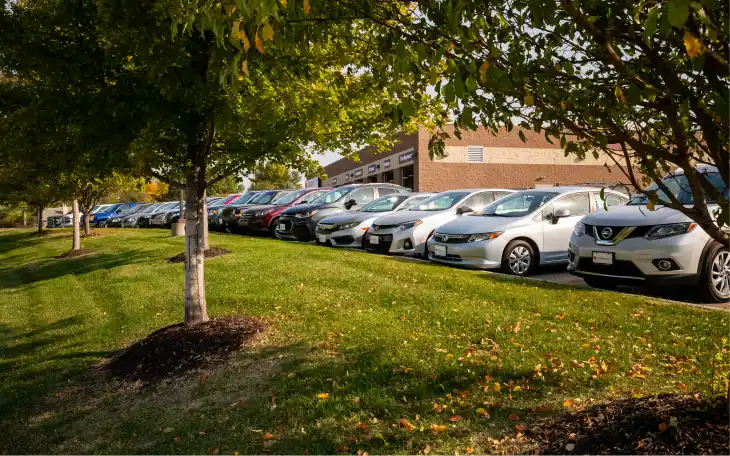
Gateway Auto Sales stays active in the Omaha used car market, with inventory that includes cars, trucks, and SUVs for different budgets and driving needs. That local experience helps our team evaluate current demand, not just national averages. If your vehicle fits what Omaha buyers want right now, that can support a stronger offer.
Understand Clean-Title, History Report, and Dealership Advantages
Title status has a major effect on value. A clean-title vehicle usually earns stronger buyer confidence than one with a salvage, rebuilt, flood, or branded title. Even if a repaired vehicle drives well, title concerns can reduce buyer interest and financing options.
Vehicle history reports also matter. They may show ownership history, reported accidents, service events, title concerns, and mileage records. A clean report can support your asking price. A report with accidents or gaps doesn't always ruin value, but it should be understood and disclosed.
Buyers want fewer surprises. When you can show a clean title, accurate mileage, and maintenance records, the transaction feels safer. This can shorten negotiation and make your car easier to compare with others.
Working with a dealership can also change the experience. Selling privately may bring a higher asking price, but it often takes more time. You may need to photograph the car, write the listing, respond to messages, schedule showings, manage test drives, negotiate, verify payment, and complete paperwork.
A dealership appraisal may be faster and simpler. The offer may account for reconditioning, resale risk, and market demand, but it can save time and reduce stress. It can also help if you plan to trade, finance your next vehicle, or apply the value toward another purchase.
Gateway Auto Sales offers an all-in-one experience with sales, financing, service, and collision support connected under the Gateway Auto name. That gives Omaha drivers a direct place to review vehicle value, look at replacement options, and discuss financing without pressure. Clean-title vehicles, transparent pricing, and free vehicle history reports help create a clearer process for buyers and sellers.
Get a Clear Value before You Sell or Trade
Fair market value is the price a vehicle is likely to bring based on its condition, mileage, history, features, and local demand. Kelley Blue Book and similar tools can help estimate that number, but they're not the same as a guaranteed sale price. The most useful value comes from combining online research, local comparisons, and an in-person appraisal.
Many drivers also ask about the $3000 rule for cars. In simple terms, it's a practical way to think about repair decisions. If a vehicle needs several thousand dollars in repairs, compare that cost with the car’s current value and replacement options before spending the money. If repairs won't raise the value enough, selling or trading may be the better choice.
To calculate your car valuation with more confidence, start with accurate vehicle details, check online tools, compare local Omaha listings, review condition honestly, and gather service records. Then get a local appraisal from a team that understands the market.
Gateway Auto Sales can help you move from estimate to real-world offer. Bring your VIN, mileage, title information, service records, and any online estimates you have already gathered. Our team can review the vehicle, explain what affects the price, and help you decide whether selling, trading, or shopping for your next vehicle makes sense.
Ready to learn what your car may be worth? Contact Gateway Auto Sales in Omaha for a clear, friendly appraisal and a straightforward next step.